

The launch of the Capri line in 1958 introduced the term Deluxe to the Rickenbacker lexicon—implicitly implying the existence of “Standard” models as well, even if they weren’t explicitly labeled as such. In the decades since, company literature has referred to certain instruments as both “Deluxe” and as having “Deluxe features”. Though the terminology may vary slightly, the idea remains the same: some models are just fancier than others.

So what exactly makes a guitar Deluxe?
If I were to give you a list of what Rickenbacker has decreed to be “Deluxe features” and say a guitar must have ALL of these features to be considered “Deluxe”, we’d end up excluding a lot of models that are in fact considered to be Deluxe models. But if I said any guitar that has at least one of these features is Deluxe, we’d wind up with a lot of false positives.
In practice, “Deluxe” has historically meant something closer to an upgraded trim package rather than a technical specification package. These guitars typically share the same basic platform as their Standard counterparts, but add additional appointments and premium features.
So instead of strict rules, it’s easier to think in terms of patterns.
Here are the key features commonly found on Deluxe guitars that are not usually present on Standard models:
A bound body. Front or back or both.
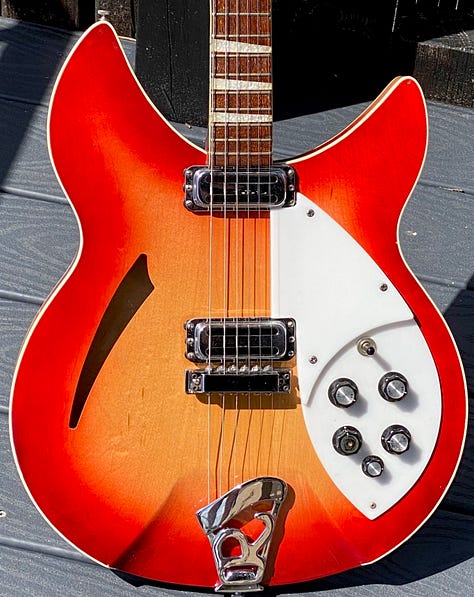
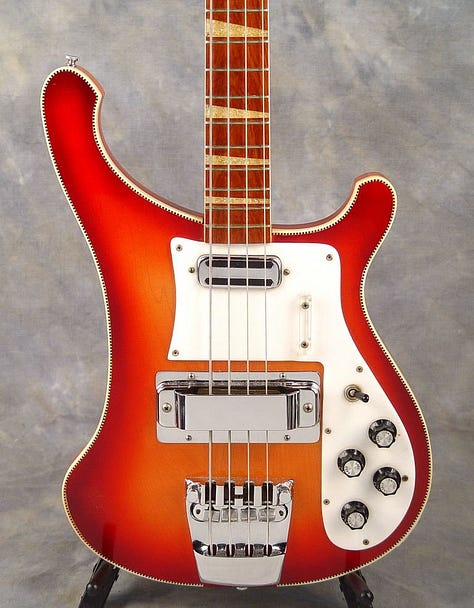
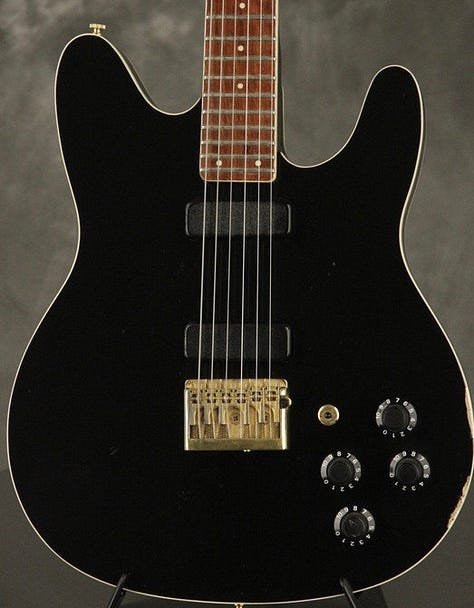
Bound 360OS, 4001, 250 A bound neck.
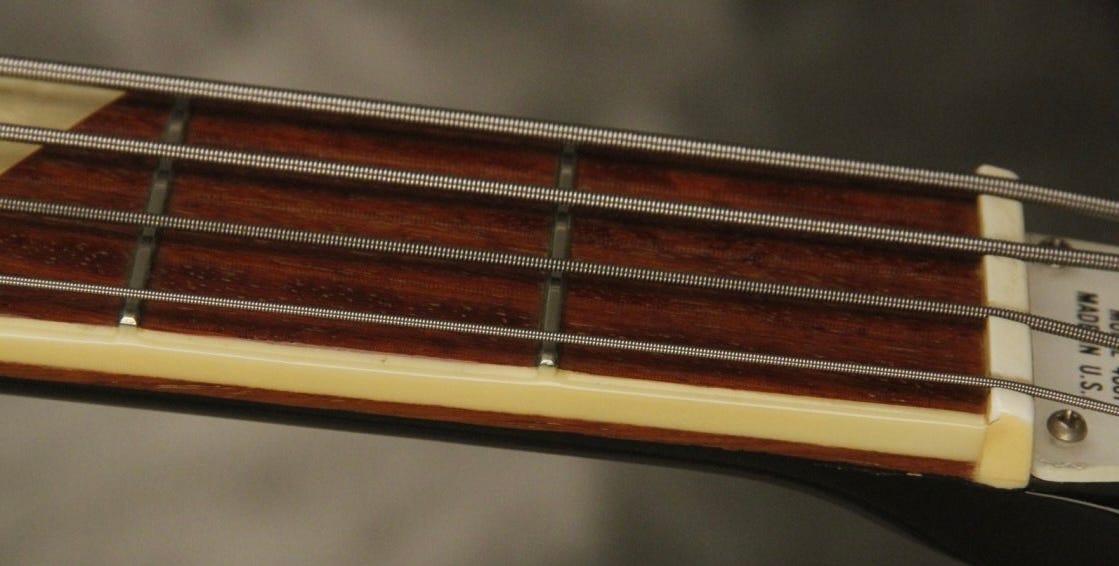
Bound 4001 neck Triangle position markers.
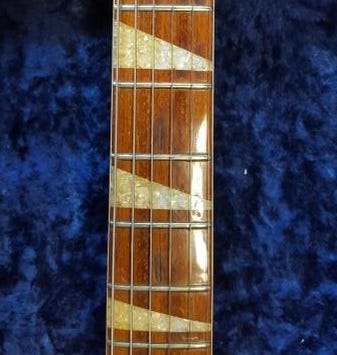
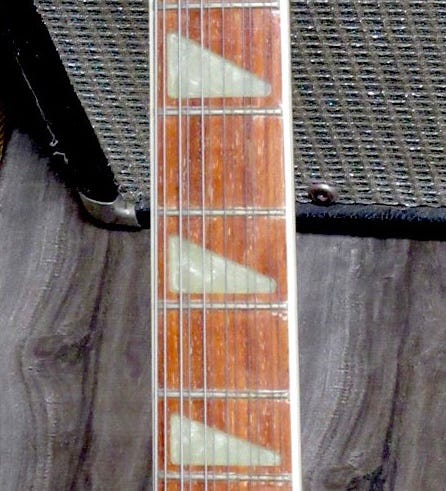
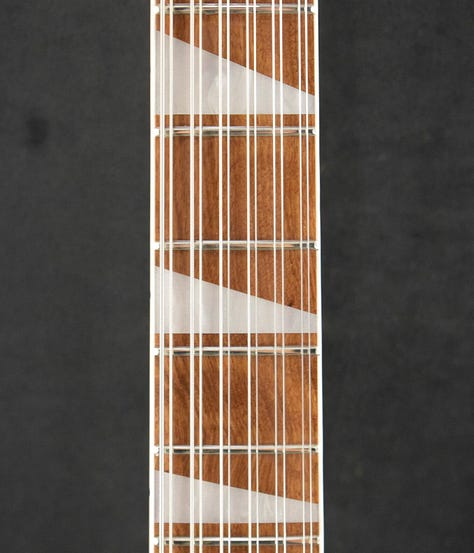
1960s crushed pearl; 1970s poured resin; 2010s acrylic Rick-O-Sound stereo wiring.
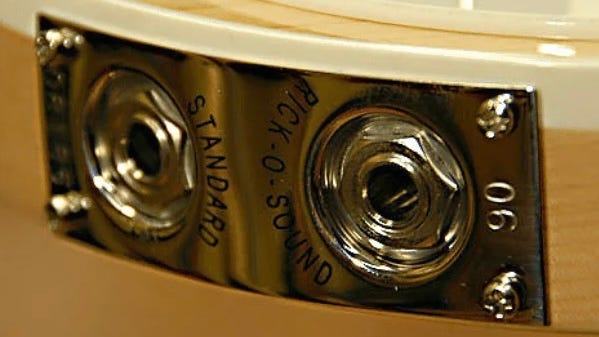
Rick-O-Sound mono/stereo output jacks Gold hardware
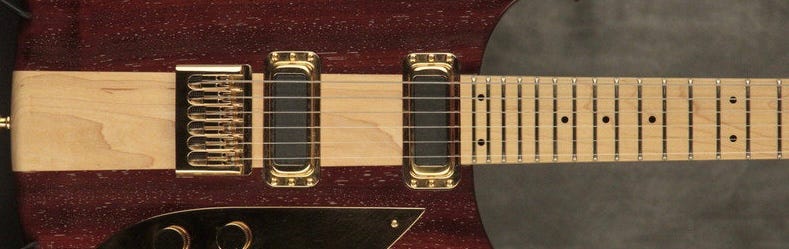


None of these appear on every “Deluxe” model. And a couple of them—especially bound bodies and bound necks—have appeared on at least one non-Deluxe model.
So what’s the rule?
Think of this as a rule of thumb rather than a strict definition:
Gold hardware is always Deluxe. Otherwise, a guitar that has at least two of the following features is almost certainly a Deluxe model:
Bound body
Bound neck
Triangle inlays
Stereo wiring
That simple rule of thumb correctly identifies all guitars that Rickenbacker has historically referred to as Deluxe instruments.
Consider the 330 and “Old Style” 360. Same body, same pickups, same hardware. Take the Standard 330 and add triangle inlays, neck and body binding, and stereo wiring and you have the Deluxe 360.
You can see similar relationships through the entire line, where a core design is offered in both simpler and more elaborately trimmed forms. Think 4003S and 4003, 610 and 620, or 450 and 460. Standard plus fancy bits equals Deluxe.
So while the exact combination of features has varied over the decades, the underlying idea has remained consistent.
Deluxe doesn’t describe a single fixed set of features. It describes a combination of upgraded appointments that can vary from model to model.
And now you know.